
Lesson 1
The Yogic tradition describes all of manifestation as a unfolding process that begins with an urge, then becomes a thought, and finally an action. Living at the surface of reality, all we see are the actions, and we are driven from one action to the next in an endless circle called samsara. We expend tremendous amounts of energy here for very little return. The practice of yoga, through asana and meditation, helps us surrender the external manifestation and start to work more efficiently from the deeper levels of the energetic urge. Hanuman is the presiding deity of this training— he is considered the son of the wind, Vayu. The Vayus are one of the many teachings of how the yogic tradition teaches us to harness the force that is behind our actions, as a way of ensuring that our actions are not only successful, but lead to our growth. This is like learning to sail with the wind, as Hanuman did, as opposed to simply motoring wherever your patterns dictate. This energetic force, like the wind, is invisible to the eye, yet can be felt through our practice. This is essentially the teaching of surrender, how to work from our hearts, not our head.
Ayurvedic practitioner David Frawley describes the force of Vayu in the following way: “Vayu is not just a force of the wind or air element, but the Kriya Shakti or power of action that governs all inanimate and animate forces. Vayu manifests as lightning or propulsive force (vidyut). This is not just the lightning that arises from clouds but the kinetic energy that permeates all space. Vayu is the energy operative from a subatomic level to the very Big Bang behind the universe as a whole. Tapping into it is what the methodology of Yoga is all about.” - American Institute of Vedic Studies, Dr. David Frawley
As we see here, the practice of working form the inside out, from the atomic to the manifest, is at the heart of all yogic practice. The physics of Kashmir Shaivism describe this concept at the atomic level through their explanation of the Tattvas, the yogic map of manifestation. In this diagram we see that Iccha Shakti, the urge, precedes Jnana shakti, the thought, which precedes Kriya Shakti, the action, which yields manifestation. The urge is a more subtle, yet more expansive experience— as Frawley says it is a ‘kinetic force that permeates all space’, and therefore requires surrender to work with consciously. To access this deeper space of awareness we have to surrender our grip on our actions and thoughts, and when we do, our actions and thoughts begin to reflect a more expansive and surrendered reality. This, in the simplest way, is how our meditation practice can deeply effect our asana practice.
This is the experience of working from the inside out, of letting the Shakti guide our sails so to speak. Sri ShambhavAnanda describes this as ‘using the grace’ that is available in our lives to help guide us towards unforeseen possibilities. “Use the grace that is available, and you should get better at your life. You should find more peace and more balance in yourself. Your life may not bring you everything you want. But, I can tell you that I have been continually surprised how using my practice and surrendering when I encounter obstacles allows new doors to open. Always, more options open up for me than I ever dreamed possible. They are also significantly better than what I was struggling and fighting to create. A spiritually mature person lives life simply, but with great depth, and is not easily thrown off track.”
Hanuman’s life story illustrates how operating from a surrendered and subtle level of awareness naturally lifts us to our greatest potential, and that this goal at the heart of all yogic practice. Hanuman was born with supernatural powers, and as a child he let those powers get out of control. After giving birth to Hanuman, his mother had to return to the astral realm. She told Hanuman not to worry, that whenever he was hungry ‘fruits as red and ripe as rising sun would be his nourishment’. Hanuman looked up at the sun itself, and thought it looked like the tasty treat she was describing, and following that urge, he took a leap towards it and began to fly. His appetite for this tasty treat literally made him larger and larger as he neared the sun. Surydeva, the Sun-God, could’t protect himself because the heat of the sun couldn’t effect this immortal creature. Suryadeva cried out for help, and Indra struck Hanuman down. Other incidents like this would occur over the years. Hanuman’s power would continue to grow, but it was unbridled and caused injury and chaos— so as a safe guard to the world, powerful sages cursed Hanuman to forget his magic abilities. Much later in his life Hanuman re-discoverd his divine powers directly through his efforts to help Ram fulfill his Dharma in the epic tale of the Ramayana. THe powers, such as the ability to fly, to lift a mountain, to become large or small, came to him one-by-one as he needed them in order to support a cause that was bigger than his own needs.
When we live on the surface of reality, baser urges can drive us towards perilous ends, such as Hanuman’s attempt to devour the sun. This can be like trying to do a handstand just based on what you see in a picture, using your superficial muscles to support you. When use our practice to connect more deeply inside, though, those urges guide us towards growth, such as Hanuman’s ability to fly across the ocean to save Lakshman. On the many this would look like taking time to feel more stability in your shoulders in a variety of smaller movements that keep you connected within, and letting your life manifest a version of handstand that actually serves your growth, or saves you, so to speak, from samsara like Hanuman did for Lakshman.
We can put this teaching into practice through an unique exploration of plank pose we call ‘invisible plank’. Normally, a posture like this is all about force, all about external work and superficial muscles. There is no doubt that it gives a fulfilling sense of accomplishment, but when we approach this posture from the inside out, taking time to explore the sensation of support in our shoulders, we find a much vaster horizon of possibilities. The work is still present, but its a completely different experience of the work, with completely different results. We call it ‘invisible plank’ because the work that we seek, like the urge of Iccha Shakti, is in our deep core— a foundational level of support that goes unseen yet is the foundation of every posture. Taking time to slow down, feel, and build this experience from the inside out allows us to harness the invisible force, or Vayu, present in the pose and allow it to carry our bodies effortlessly, yet with effort, across the ocean of samsara.
Everything, Everywhere, All at Once
Our Deep Core is not just another muscle group, you might say it’s “everything, everywhere, all at once”— but we’ll be a little more specific. You remember this image from the level one training. The idea is that most people view the core as a granite ball of strength, like the one pictured here, when in reality the real miracle in this photo is the fountain underneath the 10,000 pound stone that floats it so lightly that children can spin it with ease. This is the work of our deep front line, a hydraulic fountain of support that quite literally lifts us up against the pull of gravity and allows us to float over the surface of the earth with ease.
As Thomas Meyers puts it in his text Anatomy Trains, “there is no movement that is strictly the province of the DFL (another way of referring to the Deep Core), yet neither is any movement outside its influence…” The foundation of a building, the urge of an action, the heart level of a mantra— there is a silent precursor to all of our work on and off the mat. When that foundation is level, the building feels stable, when its not, we find it endlessly crumbling towards one injury or another.
The deep core runs the inner most mid line of our body from toe to tongue. In our feet it defines our arches, in our calves it lies under the Gastrocs nestled up against the backside of the shin, in our thighs it is the adductor group of the inner thigh, in our torso it is the inner most cylinder of the pelvic floor, transverse abdominus, and diaphragm, as well as other deep players that are out of sight but not of mind when it comes to functional movement. These are the key muscles in postural support, the muscles that make movement possible. When we say that they are silent, we don’t mean that they are impossible to feel, but rather that they require extra sensitivity. It is much like the analogy that the heart speaks when the mind is silent— the heart is always there, but the constant fluctuations of our mind drown it out. In our daily lives, we are often caught in an state of hurry worry, using the superficial aspects of our musculature to get the job done fast. This might work in the short run, but we all know that in the long run someone has to pay the bill. When we slow down, listen and feel as we move, we might move slower and lighter, but eventually this builds a tremendous foundation upon which anything can be built. As the Marines and firefighter adage goes, slow is smooth and smooth is fast. Taking time to build a foundation really pays.
Neutral is Active
The paradigm shift at the heart of the deep core is the realization that neutral posture requires work, specifically the work of our deep core. In a car neutral means off, but in a body neutral means ‘quietly active’, this is the activity of your deep core. When we sit or stand we often fall into our predisposed patterns, tight hips flexors or low back tend to pull the pelvis into an anterior tilt, for example. Standing in Tadasana, or sitting upright for meditation, requires consistent and subtle effort by the practitioner. If we approach our posture from the outside in, like many do in the beginning of their meditation posture, their back hurts or they constantly fidget. This is because the individual is trying to use superficial muscles to do the work of our deep core, and they simple aren’t built for it. As we will discuss in our next lesson, superficial muscles are meant to come on for bigger actions, and then be relived of duty— not stay on all day to support our posture. But this is exactly what happens when the foundation of the deep core isn’t present.
As a meditation practitioner you can think of the deep core as the work of being present. In a way nothing could be easier, we are surrounded by the present constantly, but in another way we know that the work of being present is profound. We can try to be present with superficial means, such as staring at a point, counting, or other training methods, but ultimately it is the subtle, and powerful, work of surrender that really helps us find and reside in the present. Being present is powerful, just like your deep core.
And as yogis we know that being present is a foundational aspect to any endeavor. Similarly, the deep core is a foundation for any movement. Its easy to take a foundation for granted because its out of sight, but skillful practitioners are constantly bringing their attention back to it. Foundations don’t get a lot of attention, but without them we crumble, as Thomas Meyers describes it: “Lack of support, balance, and proper tonus in the DFL (as in the common pattern where short DFL myofascia does not allow the hip joint to open fully into extension) will produce overall shortening in the body, encourage collapse in the pelvic and spinal core, and lay the groundwork for negative compensatory adjustments in all the other lines we have described”.
Common Core Collapse
The postures of yoga are a spectrum of ways that we can quietly challenge our body to find its foundation, and our awareness to find the present. The most fundamental postures in yoga are Padmasana and Tadasana, sitting and standing upright. These postures may appear simple on the surface, but try remaining in them for a few minutes, or thirty minutes for meditation, and a faulty foundation will start to reveal itself. I have seen many young students come to the ashram and appear fit, lifting weights and going for runs, for example, but when asked to sit upright for 30 minutes their body struggles due to a lack of deep core support. This is why re-learning our postures from the inside out is so crucial, without it we simply can’t get very far.
Each posture in yoga offers us a chance to do the subtle work of finding neutral, and when you do so, it feels so good. The image of the posture is nowhere near as colorful as the inner experience when the deep core is present. It is this rich inner tapestry that allows the practitioner the patience to progress through the postures in a sustainable way that ensures their work is not only not injurious, but is deepening their foundation.
The cross section image of our core cylinder helps to shed light on the place and function of our deep core. In this image we see the layering of our cylinder, from inside to out. At the innermost layer we see the muscles of our Deep Front Line, aka our deep core. This would be the Transverse Abdominus, which connects to the inner aspects of the ilum crest, and meshes down into the pelvic floor below and diaphragm above. The act of neutralizing our pelvis and spine in any position requires that this innermost aspect of our deep core activate, forming the foundation of all the work that will take place above it, such as activation of the internal and external obliques, erector spinae and/or rectus abdominus. In our next lesson we will build on this foundation, but for today we seek to spend time quite literally finding and deepening our foundation.
Interestingly, in keeping with our theme of the Tattvas and discovering the innermost force of our movements akin to the Vayus, it should be noted that many of the deep core players, such as the diaphragm, transverse abdominus, pelvic floor group and multifidus have been shown in multiple studies to have an anticipatory effect, meaning that they may Fire intuitively before the conscious movement of a limb we catch or throw for instance. The truly expounds on the yogic tradition’s message of the urge preceding the thought preceding the action. When we quiet our mind, and start to feel more subtly within our body during asana practice, we can star to feel this preemptive action and consciously support it. This is one example of what is meant by working from the inside out, or working from the source.
Preemptive Core experiment in table
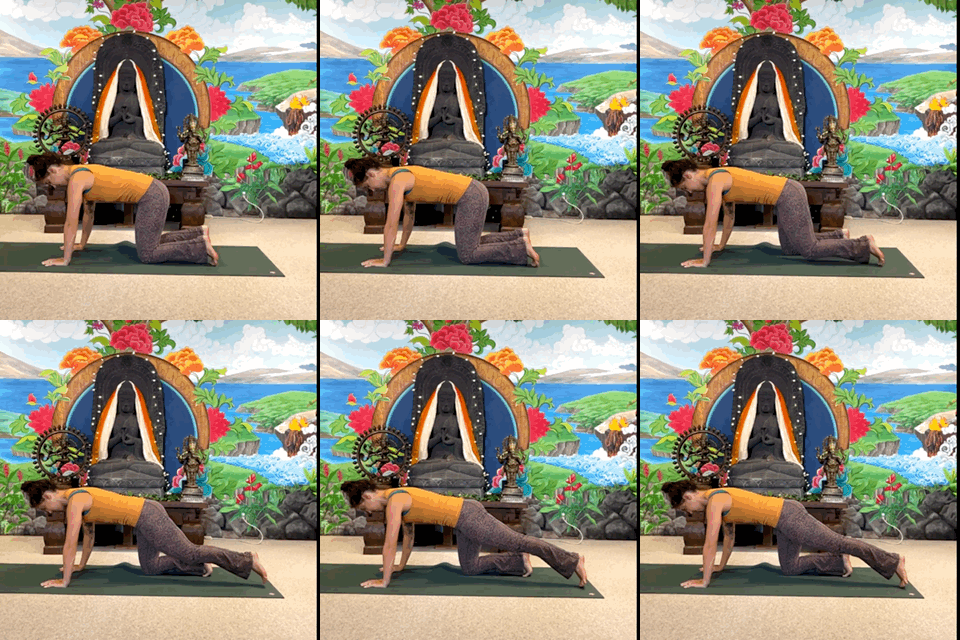
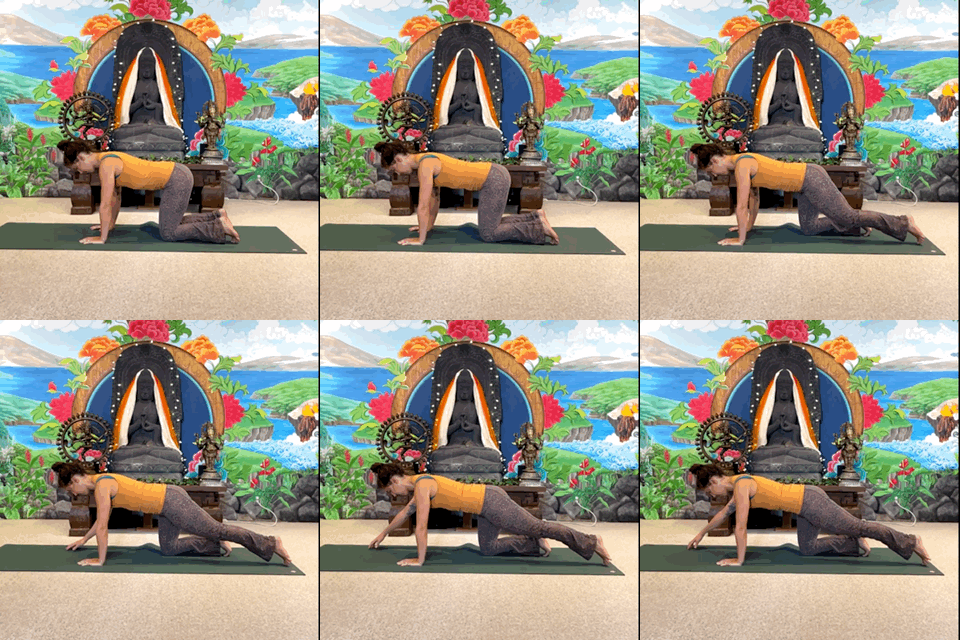
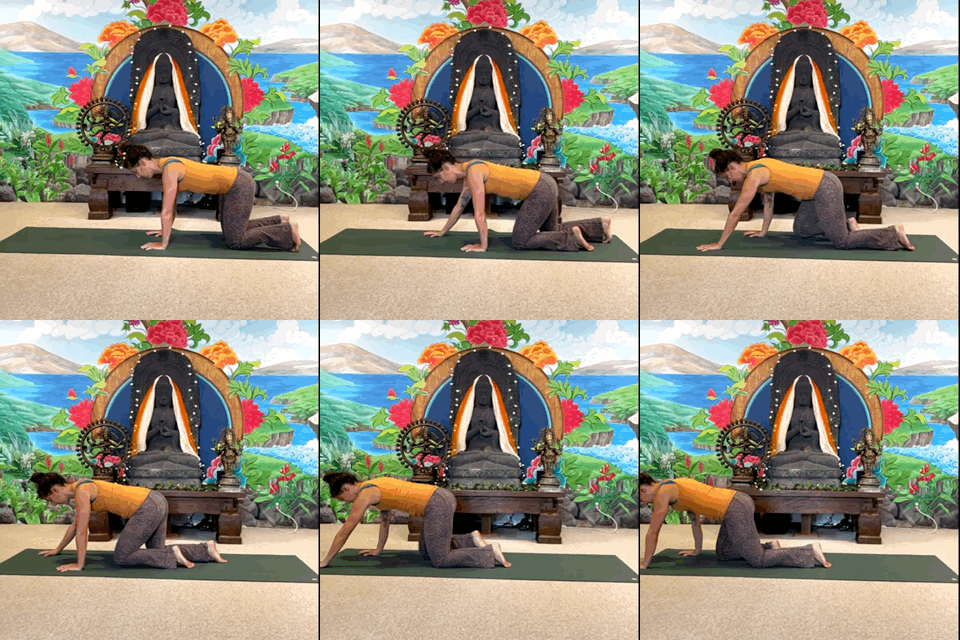
From table, move very slowly and begin to un-weight one hand as if you were going to bring the weight of your table into the other hand. Don’t even lift the hand from the floor, but rather, un-weight it to see the effect that small action has on the rest of the body. You will feel a subtle condensing of your deep core every time the weight shifts. When you start to tune in you notice that there is no way to prevent this deep core action from taking place, it operates at such a fundamental level. Can you feel the anticipatory effect of the transverse abdominus and pelvic floor activate even before you shift your weight?
When you work with the deep core you find yourself drawn deeply inside, to the more subtle aspects of your body and breath. By doing so you will feel renewed, you will feel a strong potential energy bubbling up. As you learn to work at these deeper layers of your physical body, your mind naturally quiets, and you become tuned in to very subtle sensation. The deep core is like tuning into the Iccha Shakti, the urge, of a movement, feeling its source before it becomes an action. This isn’t metaphorical, or simply a visualization, its a physical reality that you not only can do, but must do, in order to build a supportive posture, and possibly progress into more complex movements in a way that are not only not injurious, but actually help you grow from the ground up.
Deep Core Toe Taps Exercise
Overview: we find awakening the deep core easiest on the back at first as it gives more awareness of the pelvis and the spine. Many people have trouble finding neutral and may not be aware that their default positioning is not neutral. It is important to take time with adding the layers of the the movement- advancing too quickly will take the body out of neutral and further reinforce compensatory patterns. When in doubt, stay at the same level and do more reps until the body gets very confident with providing unwavering support and neutrality as your movements seek to challenge that support.
Set-up
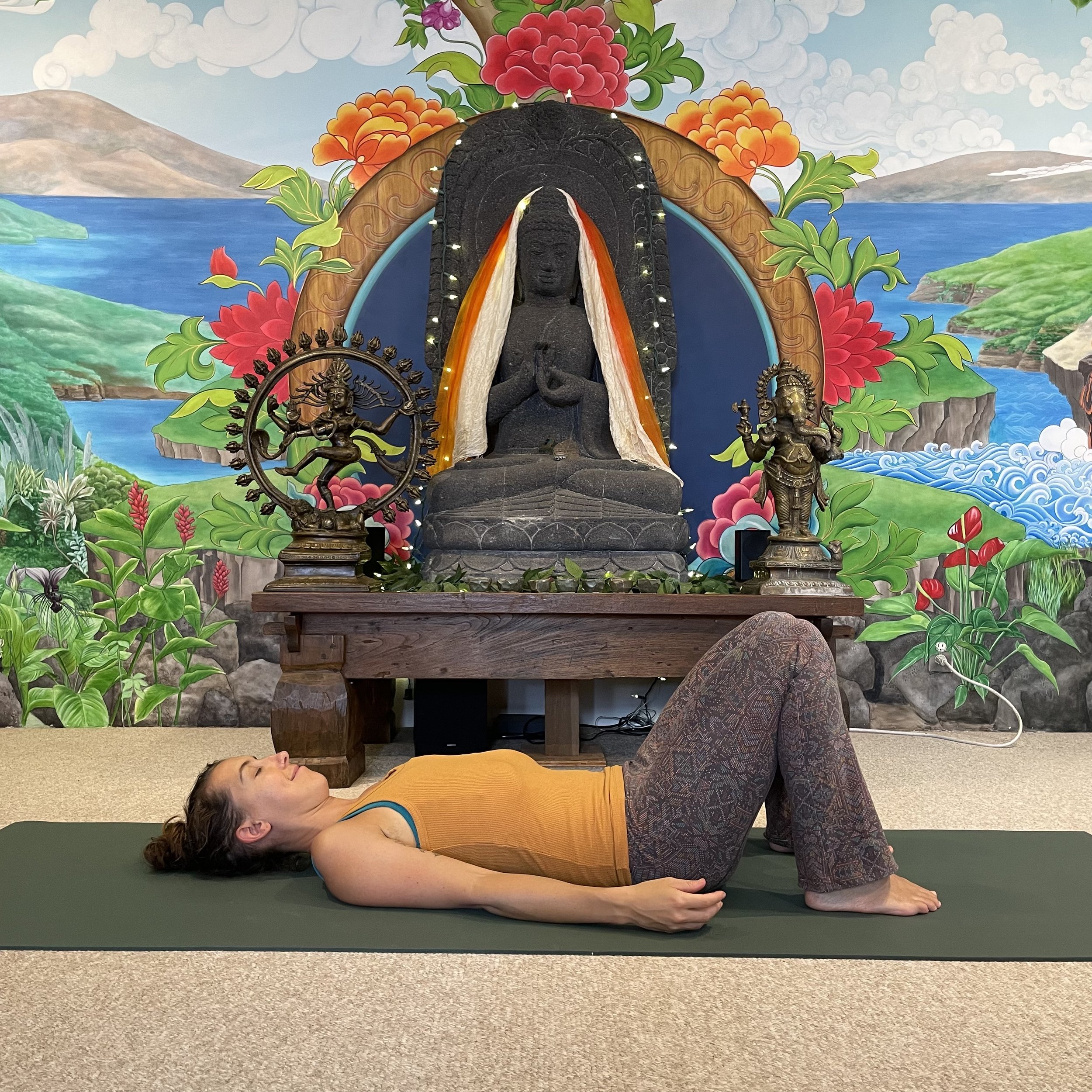
Lie flat on your back. Gradually pull one heel after the other towards your sit bones, feeling the gentle core engagement that's already occurring. By following this method, your feet will naturally position themselves in relation to the sit bones, influenced by your hamstring's length and strength.
Tilt the pelvis forward, creating a minor arch in the lower back. Then, tilt the pelvis backward, flattening the arch. Repeat these motions, each time refining and reducing the pelvic tilt, until you find a balanced middle position that aligns with a natural pelvis and spine. You should feel a mild engagement of the front body, particularly the rectus abdominus, to uphold this neutral position. This subtle firmness exemplifies the deep core support essential for our daily activities and should serve as the foundational feeling for all our movements.
Primary Movement Progression (Deep core engagement)
Layer One: Un-weighting the feet
Refocus on the gentle engagement of your neutral pelvis.
While maintaining this engagement:
Exhale and subtly 'un-weight' one foot. This means either keeping the foot on the ground or slightly raising it just enough to slip a piece of paper underneath.
Recognize the direct link between un-weighting the foot and your deep core activation.
Try the same with the opposite foot.
Layer Two: Unweighting a couple of inches
Redirect your focus to the engagement of your neutral pelvis.
Start by un-weighting one foot, gradually lifting it an inch or two off the ground.
Lower it back slowly and repeat with the other foot.
Layer Three: Unweighting to 45 degrees, adding other foot.
Once more, concentrate on the subtle core activation. Maintain this posture and un-weight one foot, allowing it to rise until the shin forms a 45-degree angle with the floor.
While keeping a neutral spine and pelvis, begin un-weighting the second foot. Notice the heightened effort as the weight shifts.
Typically, there's no need to elevate the second foot too much. Working minimally can yield significant results. After, re-position the feet on the ground, re-align the pelvis, and repeat with the other foot.
Eventually the second leg can lift to mirror the first leg, should the craving arise.
Layer four: extending the leg
from the activation of Layer 3, foot unweighted to 45 degrees, allow other leg to weightless glide forward. The further the leg travels, the more challenging it will be, so you do not need to extend leg fully unless the body is craving it.
After exploring this exercise, extend the legs to a reclined Tadasana, with pelvis and spine remaining neutral with deep core support. Imagine yourself bringing this same amount of gentle, surrendered effort to your standing Tadasana.
Deep Core Illumination from a Variety of Starting Positions
Now that you have experienced this process in great depth on the back, let’s look at other positions in which you can start to awaken the deep core:
table top - from table top tip pelvis forward and backward. Try to keep the rest of the body unmoving. Let the tipping get smaller and smaller, noticing what muscles have to work to perform this minimal movement. Eventually, stop and hover at a place that feels neutral to you- the spine is long while still maintaining its curves and the pelvis and rib cage feel parallel.
ways to load the deep core in table:
layer one: unweight one hand or foot
layer two: glide unweighted foot back without tipping pelvis
Layer three: with foot back, unweight and glide opposite hand forward
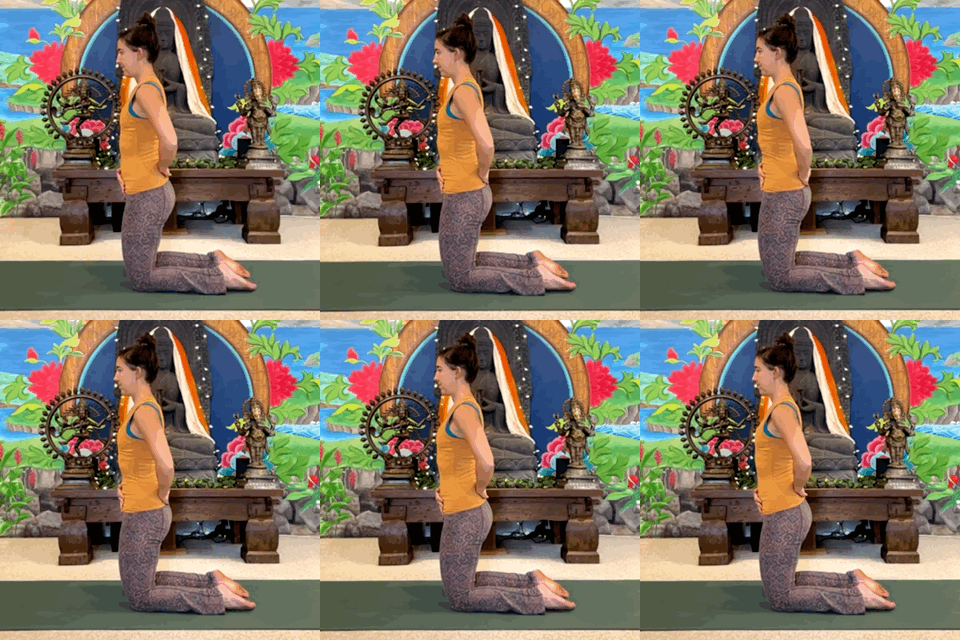
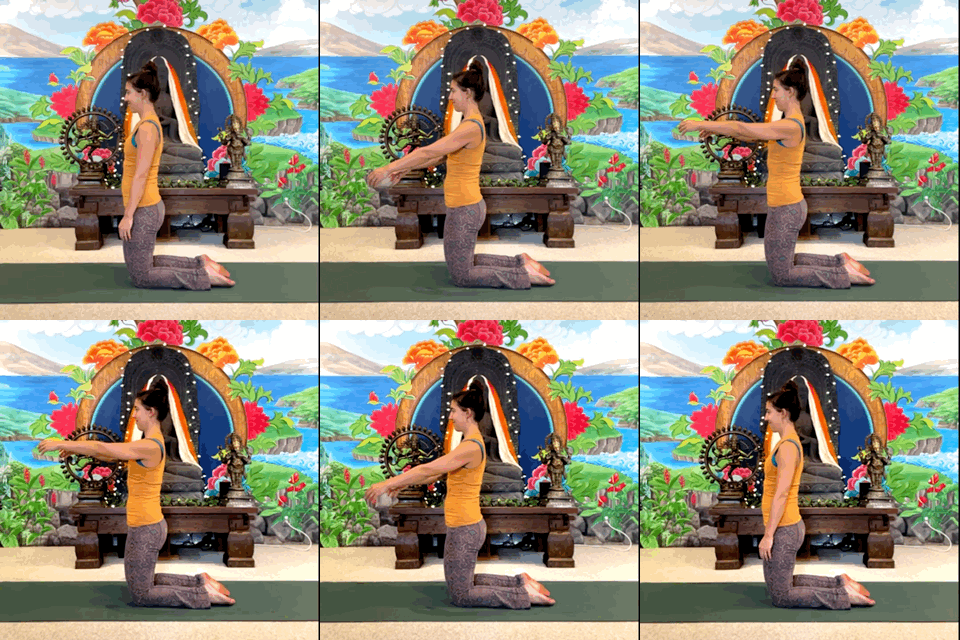
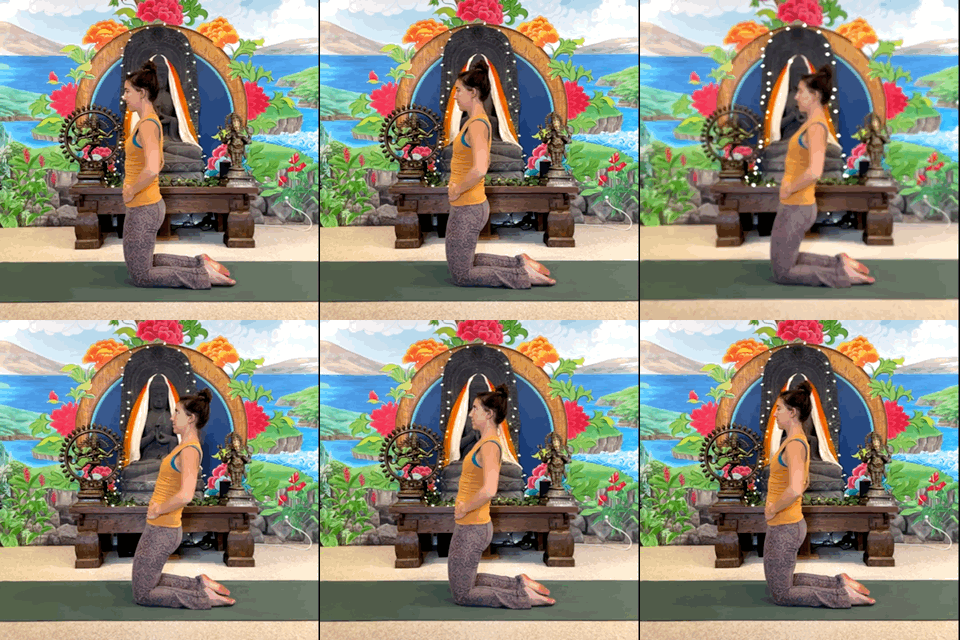
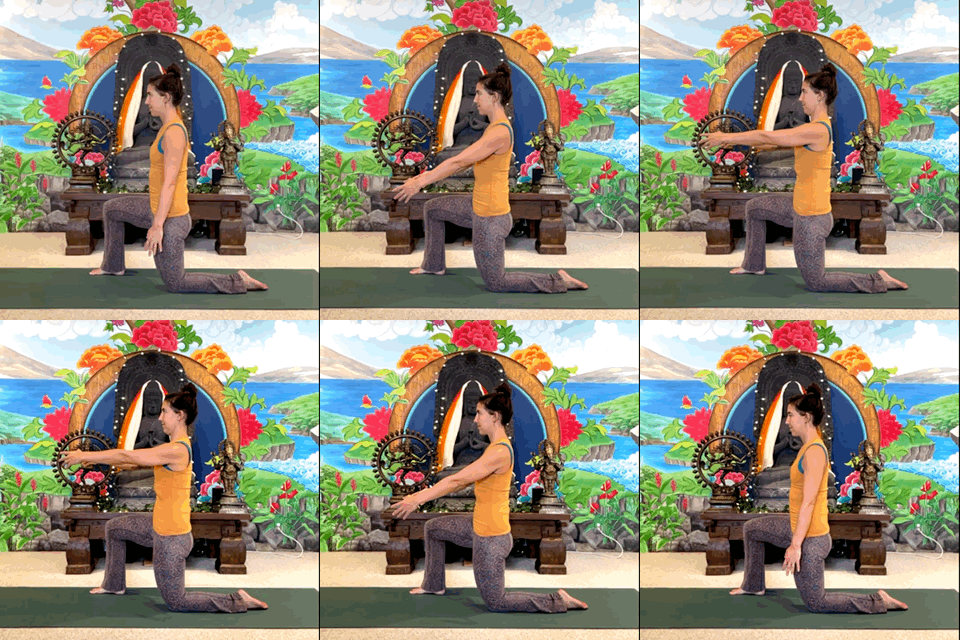
kneeling- find neutral pelvis and spine, and then load deep core with an arm float
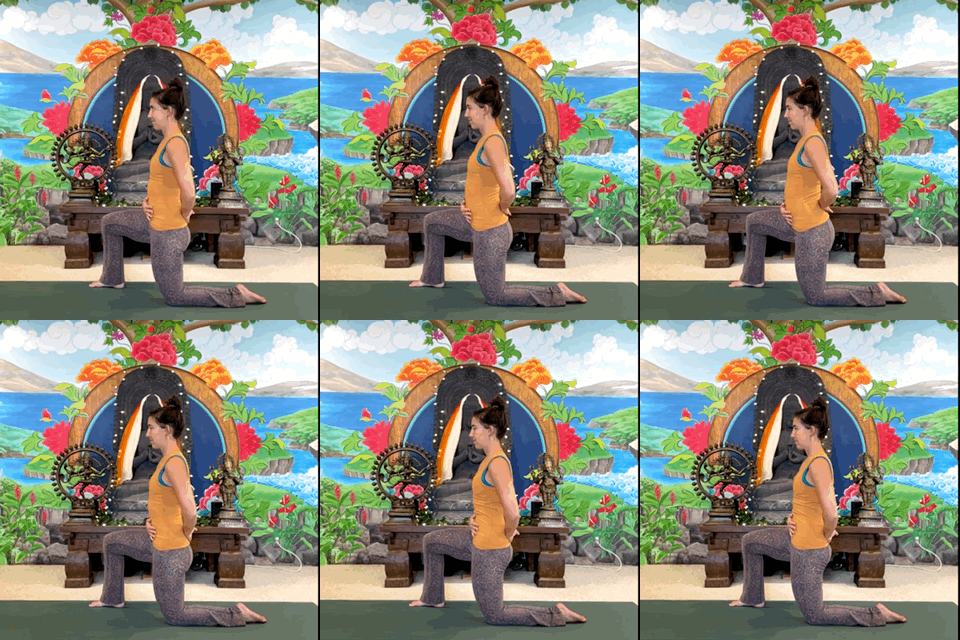
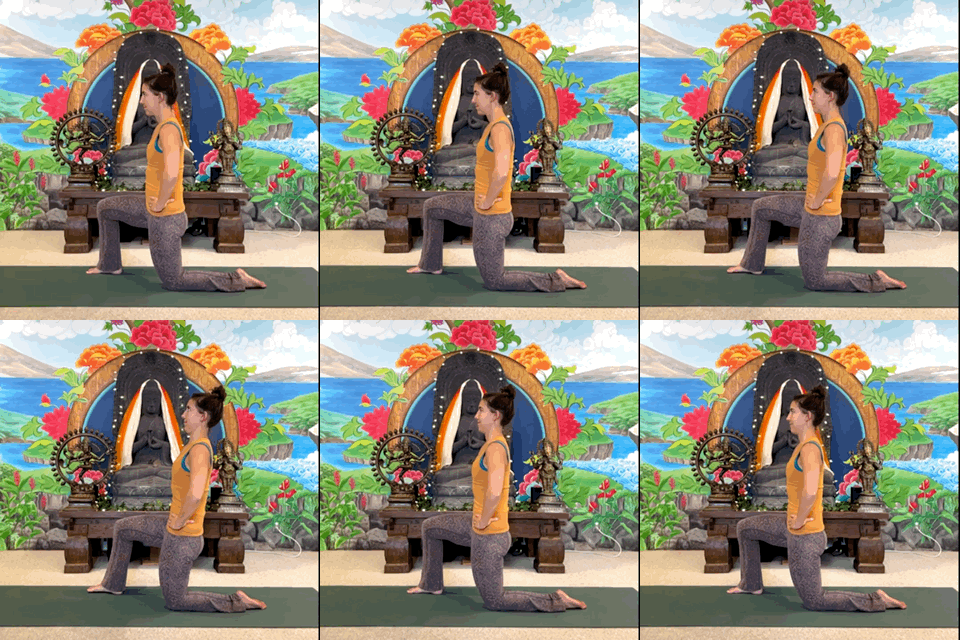
anjaneyasana- find neutral pelvis and spine, and then load deep core with an arm float or by unweighting back knee
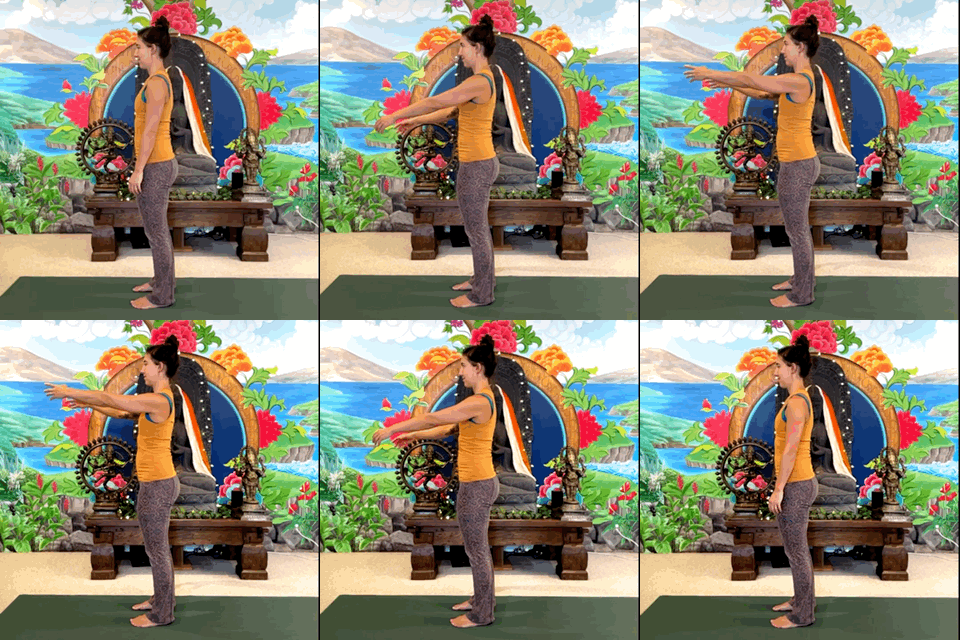
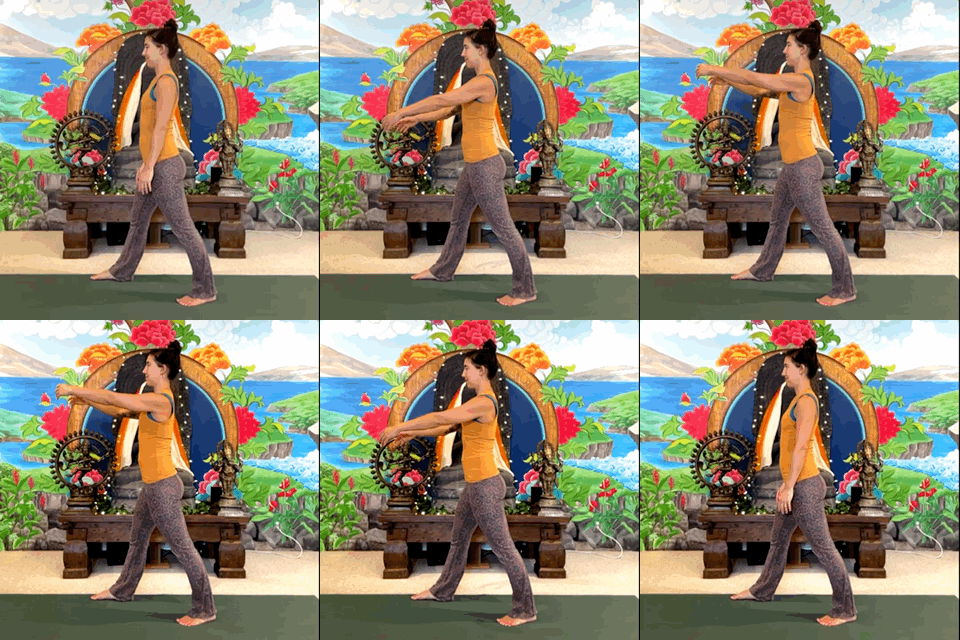
standing: from any of these setups, establish neutral pelvis and spine, and then add an arm float
tadasana
vira 1
straddle
vira 2- note- this one is tricky- try taking weight out of heels
review
in the set up of the pose, find neutral
add weight in the gentlest way possible- arm floats to shift center of gravity forward or unweighting something contacting the earth