
Additional Resources on the Breath
An additional Video presentation on the topic of breath meditation.
A short explanation and mediation with the Shambhavi Mudra.
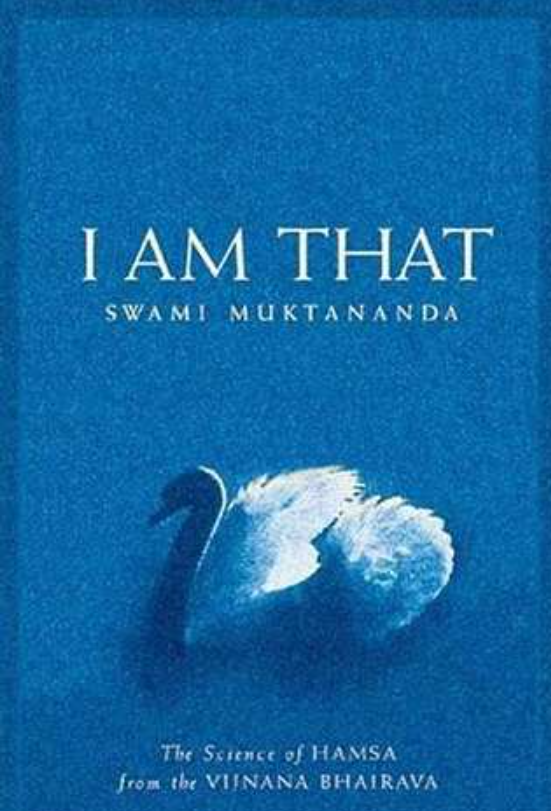
Ham Sah
An excerpt from Swami Muktananda’s book on the practice of Ham Sah
Chapter on Breath Meditation from ShambhavAnanda Yoga Publication, “Sacred Journey”
MEDITATIONS ON THE BREATH
“It is the consciousness of life which becomes the breath of life and gives life to a body. The breath of life is the consciousness of life, and the consciousness of life is the breath of life.”
- From Kaushitaki Upanishad
“Breathing consciously becomes a conduit for energy from a more refined source, from a spiritual source. And that energy has a distinct difference. At first you feel physical sensations. Things happen and you can’t quite distinguish between the physical and the spiritual. But as you become more sensitive, you start to understand. Energeti- cally, a great orator, a great speaker, a charismatic person, is working with physical energy. Spiritual energy is different. Say you have a sore leg, or you feel a buzzing in your foot, or you experience some- thing in your crown chakra. You are feeling it on a physical level, but if you have the ability to trace it to a source, you can tell where the energy is coming from on a more subtle level.”
- S. Shambhavananda
Overview: About the Breath
Just as we take a deep breath when we’re trying to relax, the breath plays a central role in the practice of meditation. On a physical level it helps us relax and on a mental level it helps to calm our nervous system and quiet our minds. The teachings of yoga have always placed a great deal of emphasis on observ- ing the breath as a way to bring awareness to our mental and emotional state. When we are tense or anxious, our breath is rapid and shallow. A deep quiet breath reflects a quiet mind. On a deeper level the breath represents our connection with our own consciousness, the source of our being.
The yogic tradition refers to breath as prana, but prana encom- passes much more than the air we take in and let out. Prana is the vital force, the life energy that empowers our mind, senses and without which we perish. Prana exists on all levels of our beings, on all planes of consciousness, in all worlds. Because it is always present, it is associated with immortality. The presence of prana in and around us becomes a focal point for meditation practice because by observing the breath we bring awareness to the constant flow of energy and its movement from outside to inside and back again. As we refine our understanding of the deeper levels of meditation, we begin to experience this move- ment of prana as a subtle movement that isn’t experienced with the physical senses. Ultimately, this awareness can bring us to the realization of oneness that is at the heart of all yoga practice.
Breath Awareness Meditation
Sit comfortably with your back straight, shoulders above the hips and your hands resting on your thighs. Close your eyes and turn your attention inside. Notice your breathing. Where does it start? Where does it go inside? How does it feel? Is it fast or slow? What happens to your body when you breathe out? Where does it go outside?
Continue to notice the qualities of the breath. You don't have to do anything to change it. Just notice it. Get in touch with the flow of the breath. Follow it as it moves in and out. There's no right way to feel and there's nothing you have to do at this mo- ment except watch the flow of the breath. Watch and feel the breath as it comes into the nose, through the throat, and into the chest. You may feel your diaphragm fill with air and your belly expanding with the breath. Watch and feel the breath as it flows out again from the lungs, through the throat and out from the nose.
Notice that as you begin to relax your whole body just releases toward the floor. Let yourself soften from the inside out but keep your back straight. As you relax you may notice that your breath naturally becomes more relaxed and full.
Even though you feel relaxed keep your mind awake. By watch- ing the breath you can become even more relaxed than if you fell asleep. Its okay if your attention should wander. Just bring your focus back to the breath. It really doesn't matter how many times your mind drifts away from the breath. What's important is that you keep bringing your mind back to your breathing.
Ham Sah Meditation
“In the practice of ‘ham sah’, the mantra takes place on its own, and the goal of the mantra is the Self. It is That which repeats it, it is That which is its goal, and it is That which is attained by repeating it. When the mantra, the repeater of the mantra, and the goal of the mantra become one and the same for you, you attain the fruit of the mantra.”
- Swami Muktananda
“The technique of meditation that we use is the ‘ham sah’ practice, which is very simple and extremely profound. It is a method to rec- ognize the pure state of consciousness that already exists within you. You are not looking for something you do not already have.”
- S. Shambhavananda
The ham sah mantra is considered the natural breath mantra. It is going on all the time, whether we are aware of it or not. It is the sound the breath makes as it naturally flows in and flows out of the body. Muktananda describes it as the “utterance of supreme Consciousness, the universal energy, that creates the universe out of its own being and that, when it resides in the hu- man body, is known as kundalini.”
The mantra “ham sah” means “I am That”. “That” refers to the consciousness that dwells within us as the Inner Self. The ham sah practice is described in the Vijnana Bhairava, a great scrip- ture from the Kashmir Shaivite tradition as follows: “The su- preme Goddess, whose nature is to create, ceaselessly expresses Herself upward from the center of the body in the form of exha- lation and downward in the form of inhalation. By steady fixa- tion of the mind at the two places of origin, there is the situation of plenitude.”
The Practice
Sit quietly and comfortably and take a few moments to relax your body and mind. Notice your breath as you inhale and ex- hale. Don’t try to alter or modify your breath, just observe it. As you relax during the inhalation, you will begin to hear the sound of ham as the breath enters your body. As you exhale you will hear the sound of sah. The ham sah mantra is always present, whether you are aware of it or not. The process of meditation is to become consciously aware of this breath flow.
The inhalation and exhalation are similar to a swinging pen- dulum. As the pendulum swings back and forth there is a mo- ment when all motion stops, and the pendulum changes direc- tions. Similarly, with the breath, between the inhalation and exhalation, the breath stops and changes directions. If you fo- cus on the point of stillness between the ham and the sah, you will find that not only does the breath stop, but the mind stops as well. The breath and the mind are intertwined in this way.
This moment of silence, this moment where all mental, emo- tional and physical activity ceases, is the gateway to the Inner Self. It is the experience of the pure consciousness that ex- ists within you. As you sit in meditation, you might also no- tice that in between one thought and another thought there is the same instant where all activity stops. Focus your awareness on these still points between thoughts and between breaths.
When you begin the practice you might notice that your mind engages in some kind of activity: thinking about yesterday or to- morrow’s agenda or some other distraction. When this happens simply bring your attention back to the practice and don’t worry about the distractions. When your mind becomes less agitated, you begin to experience pure consciousness, or the witness state. You begin to identify with the witness of all experience and activ- ity. This witness is perfectly quiet, perfectly content, and dwells in perfect truth and bliss. This is an experience of your true nature.
Surrender Meditation
The Practice
Begin by finding a comfortable seat. Elongate the spine, relax your shoulders, and rest your head comfortably on the neck. Take a few deep breaths and try to create a feeling of relaxation and openness. Then draw a conscious breath through the nose, letting it wash over your forehead, down through the throat and into the heart. On the exhale, really feel yourself relax.
Again breathe into the heart, letting the breath drop very deeply into the heart. Allow the breath to expand beyond anything you experience, any thought, any tension. Allow it to become big- ger than the tension you feel, as big and as light as you can. As you breathe in, breathe in your wish, or intention to be free, to grow consciously. As you breathe out, just let everything go, not holding on to any feeling, thought or experience. Breathe in a complete willingness to be free.
When the breath expands beyond your tension, the pranic en- ergy of the breath can work to break up or dissolve the tension you’re holding on to. So allow the energy to do something to help you. Allow the dissolving to take place. When you exhale, let everything go. Keeping your awareness inside, continue to take soft breaths into the heart, allowing yourself to expand be- yond tension. Keep experiencing greater and greater spacious- ness, and then release.